
What Happens to Workforce Housing When the Project Ends?
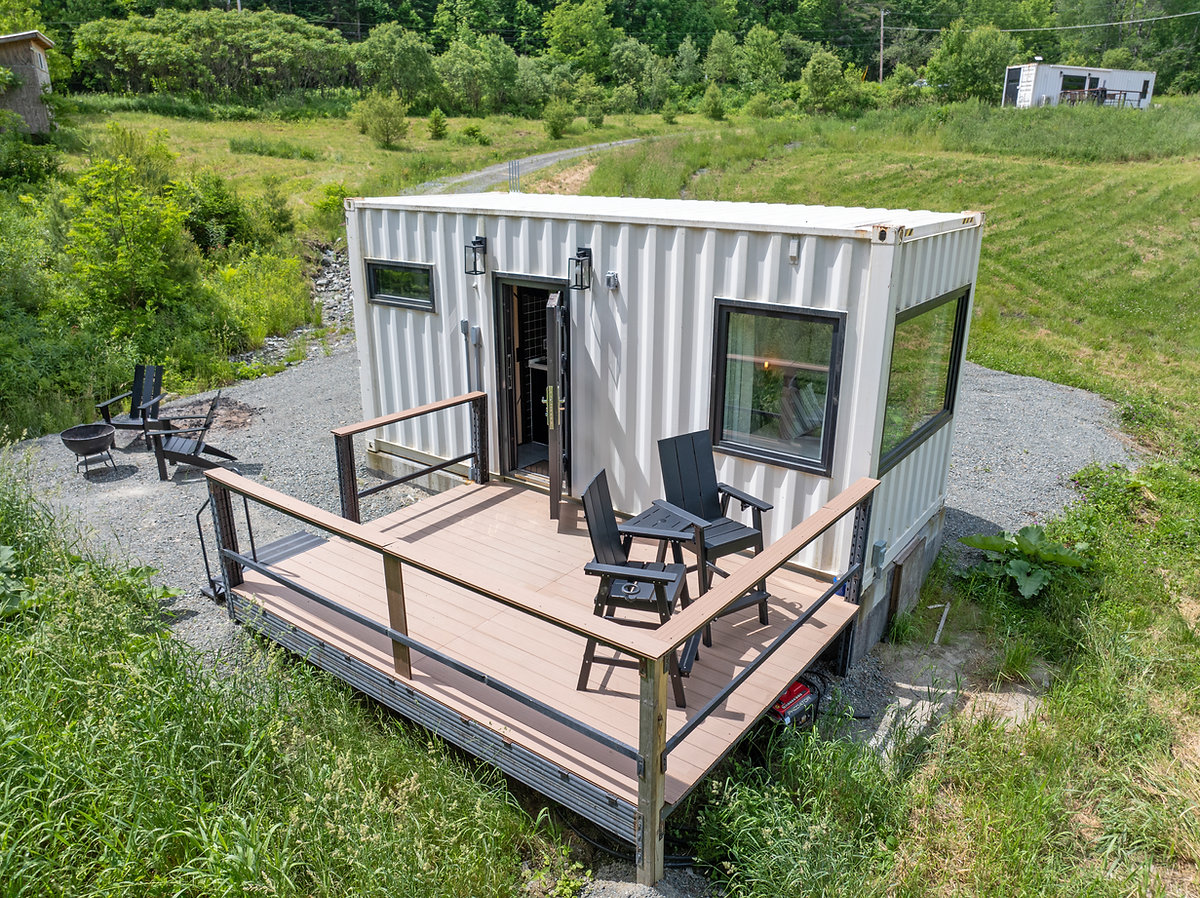
Most workforce housing conversations end at mobilization day: how fast can the beds be ready, and what will they cost? The better question to ask up front is what happens on the last day of the project, when the crew leaves and the camp is still standing there.
That question decides whether your housing is a sunk cost or an asset. With workforce housing after the project, there are five realistic outcomes, and the units you choose at the start determine which ones are open to you.
Option 1: Move It to the Next Project
For contractors and housing operators with a pipeline of work, relocation is usually the highest-value option. The same units house crew after crew, and the purchase cost spreads across several projects instead of one.
This only works if moving is practical. Units that fit a 40-foot container footprint travel as legal loads on a step-deck trailer, without the oversize permits, escorts, and daylight-only schedules that wider modular buildings need. We cover the details in Relocatable Workforce Housing: Legal Loads vs. Oversize Loads.
Option 2: Leave It for Permanent Operations Staff
A data center campus doesn't go dark when construction ends. Operations, security, and maintenance teams stay on, and the commissioning phase alone can run for months. In Northeast Louisiana, for example, about 500 permanent jobs are expected once Meta's data center opens.
Some of those workers will face the same housing shortage the construction crews did. Keeping part of the camp in place, with the larger Supervisor Suite or Site Manager Residence units, gives the operator housing for its long-term team without having to build something new.
Option 3: Sell Units to Local Buyers
A finished container unit has a life well beyond a single project. A unit that housed an electrician for two years can become a guest house, a hunting cabin, a rental unit, or a starter home for someone in the community.
Selling to local buyers turns surplus housing into recovered capital and puts homes into a market that was short on them. The buyer takes on the local side of the conversion: zoning approval, a permanent foundation, utility connections, and inspections. Our site prep guide walks through what that involves.
Option 4: Donate to a Housing Nonprofit or Housing Authority
Many rural communities hosting large construction projects also have long waiting lists for affordable housing. Donating units to a housing nonprofit, a land trust, or a public housing authority can leave something lasting behind, which matters to the developers and hyperscalers who care about their standing in the community.
Donations take planning. The receiving organization needs land, a plan for foundations and utilities, and approval from the local building department. Tax treatment depends on the donor and the recipient, so talk to a tax advisor before promising a donation.
Option 5: Convert the Site Into an Affordable Housing Community
In some places the best outcome is to leave the units where they stand and turn the camp into permanent housing. The site already has roads, water, sewer, and power, which are often the most expensive parts of a new housing development.
This works best when it's planned from the beginning. If a developer and the local government agree early that the camp may become permanent housing, the site plan, utility sizing, and unit layouts can be designed for both uses. Units built with private bathrooms and kitchenettes are much easier to convert than dormitory-style bunk trailers.
We make the case for factory-built container homes as affordable housing in The Housing Market Doesn't Have a Demand Problem. It Has a Product Problem.
Comparing the Five Outcomes
Outcome | Best when | What it takes |
Relocate | You have another project lined up | Units that move as legal freight |
Leave for operations staff | The site needs a long-term team | Units sized for longer stays |
Sell to local buyers | You want capital back | Buyers handle zoning, foundation, and utilities |
Donate | Community goodwill is a priority | A recipient with land and a plan; tax advice |
Convert to affordable housing | The site and utilities can stay | Early agreement with local officials |
Why Unit Design Decides Your Options
Every one of these outcomes depends on choices made before the first unit ships:
Footprint. A 40-foot container footprint keeps relocation simple and gives a buyer a standard, familiar shape to place.
Private rooms and baths. Units that already function as small homes resell and convert far more easily than shared bunk space.
Durable materials. A steel structure with closed-cell spray foam insulation and non-drywall interior walls holds up to years of heavy use, so a unit still has real value after the first project.
Configurable utilities. Grid, solar, or generator power and flexible water and waste options let a unit work on almost any next site.
Plan the Exit Before You Mobilize
A good RFP asks what the housing will cost. A better one also asks what the housing will be worth in three years and where it will go. Before you buy, decide which of these outcomes you want to keep available, and choose units that keep them open.
Frequently Asked Questions
What happens to a man camp after construction ends?
Traditional camps are often hauled away or sold off cheaply. Relocatable workforce housing can move to the next project, stay for operations staff, or be sold or donated for local housing.
Can workforce housing be turned into affordable housing?
Yes, when units have private bathrooms and kitchens and the site and utilities can remain. It works best when the developer and local officials plan for it before construction starts.
Who handles permits if a unit is sold to a local buyer?
The buyer, typically with a local contractor. Zoning, a permanent foundation, utility connections, and inspections are set by the local municipality.
Can workforce housing units be donated?
Yes, to housing nonprofits, land trusts, or housing authorities with land and a plan for installation. Consult a tax advisor about how a donation will be treated.
Choose Housing That Has a Second Life
Base Camp by Boma is built to move, stay, or become someone's home. Tell us about your project and how long you need housing, and we'll help you plan the exit along with the start.
Sources: KNOE, "Housing efforts underway as Meta Data Center brings surge of workers to NELA," May 19, 2025. This article is for informational purposes and is not tax or legal advice.


Comments