
Relocatable Workforce Housing: Legal Loads vs. Oversize Loads
Every workforce camp has a moving day. The data center gets built, the crews roll off, and a few hundred beds have to go somewhere else, usually to the next project, sometimes three states away.
How easy that move is gets decided long before anyone calls a trucking company. It gets decided by the width and height of the units you bought.
That's where relocatable workforce housing built from 40-foot containers has an advantage most buyers never think about during procurement: a finished unit can travel as a legal load. Many wider modular buildings can't. Here's what that difference means in permits, escorts, schedules, and headaches.
The Dimensions That Decide Everything
On the National Network of highways, the federal width limit for a trailer and its load is 102 inches, or 8 feet 6 inches. Height isn't set federally. Each state sets its own, and most land between 13 feet 6 inches and 14 feet. Some local and non-designated roads are stricter still, so every route gets checked.
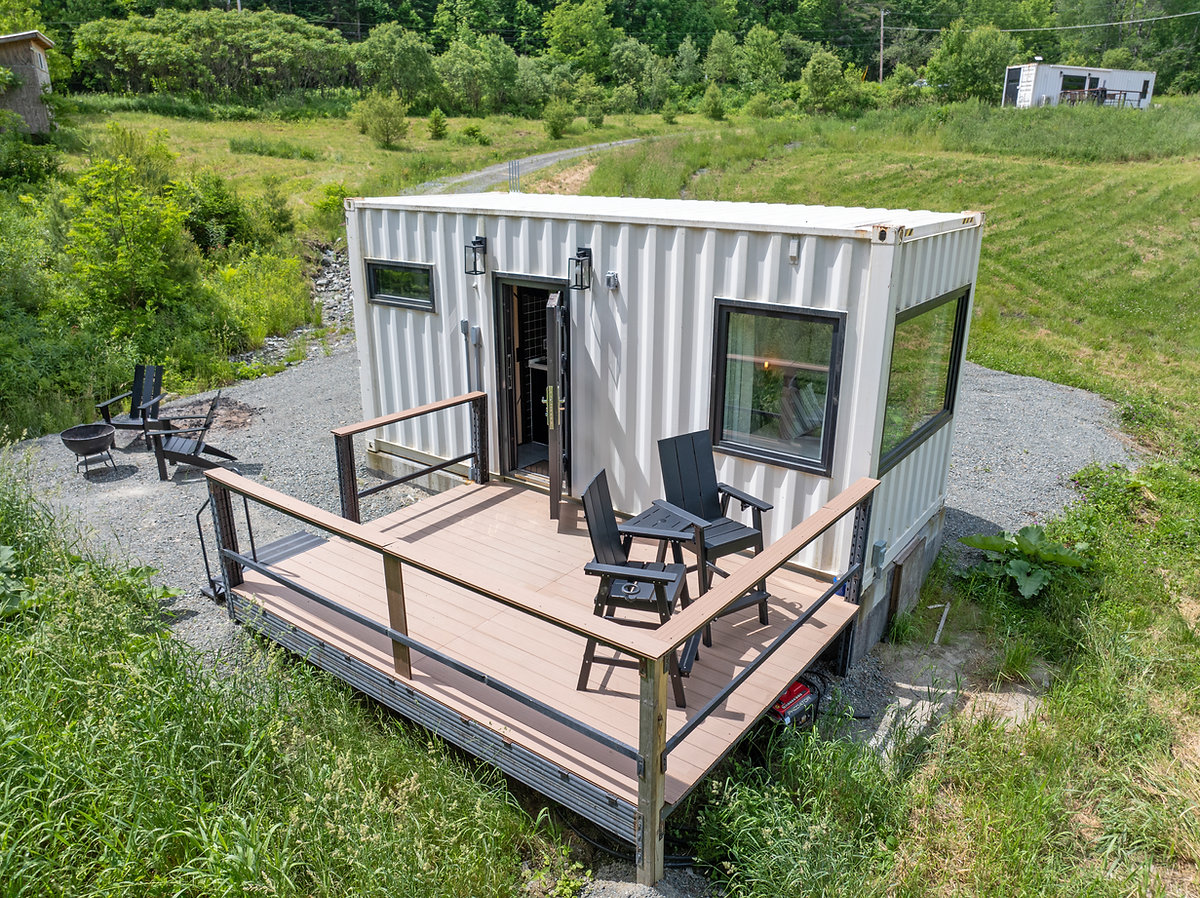
A 40-foot high-cube container is 8 feet wide and 9 feet 6 inches tall. That gives a finished Boma unit six inches of width to spare under the federal limit. Nothing hangs over the sides, no wide-load banners go on, and no state has to approve the move as an exception to its rules.
Why the Trailer Choice Matters
Width is settled by the container. Height depends on what it rides on. A high-cube container on a standard flatbed with a five-foot deck stands about 14 feet 6 inches tall, which is over the limit in most states. On a step-deck (drop-deck) flatbed, the same unit sits around 13 feet, comfortably legal.
Trailer | Approx. loaded height (high cube) | Status in most states |
Step deck / drop deck | About 13 ft | Legal height, no permit |
Container chassis | About 13 ft 6 in to 13 ft 8 in | At or just over the limit |
Standard flatbed | About 14 ft 6 in | Over height, permit and routing required |
That's why relocation planning for a container camp starts with the trailer. Put the unit on a step deck and the move is ordinary freight: legal width, legal height, and a normal truck schedule.
What Happens When a Unit Is Wider Than 8 Feet 6 Inches
Manufactured and modular building sections commonly run 12 to 16 feet wide. Anything over 102 inches needs a state oversize permit, and the rules stack up quickly from there:
A permit for every state crossed. Permits are usually single-trip and must be in hand before the truck rolls, in each state, and sometimes each county, along the route.
Pilot cars. Escorts are generally required once a load passes 12 feet wide. Above 14 to 16 feet, multiple escorts and law enforcement escorts become common.
Daylight-only travel. Loads wider than 10 feet are often restricted to daylight hours, and many states bar oversize movement on weekends and holidays.
Banners, flags, and lights. "Oversize Load" signs front and rear, flags at the widest points, and amber lights in poor visibility.
Superload rules. Loads over roughly 16 feet wide are generally treated as superloads, with tighter route, timing, and escort requirements.
Penalties. A violation can void the permit and lead to fines, impoundment, or an out-of-service order.
The permit fees themselves are often small. The real cost is everything around them: escort vehicles, route surveys, narrower travel windows, and fewer carriers willing and equipped to haul the load.
Now Multiply It by a Whole Camp
One wide load is a logistics task. A camp is a fleet.
Picture a 400-bed workforce village that has to move 600 miles to the next data center site. If every unit is an oversize load, every truck needs its own permits in every state along the way, escorts booked for each convoy, and a schedule built around daylight windows with weekends and holidays blacked out. A trip that a normal truck covers in a day or so can stretch across several days per load, and one missing permit or no-show escort holds up the line.
If every unit is a legal load, the same move looks like ordinary freight. More carriers can bid on it, trucks run on normal hours-of-service schedules, and units arrive in the order the new site can set them.
For a GC or housing operator, that difference shows up directly in mobilization dates. Housing that arrives late holds up a crew, and a delayed crew holds up the schedule.
Moving Is Part of the Asset's Value
Relocatable housing is only an asset if relocating it is practical. A camp that costs a fortune to move tends to get abandoned in place, sold at a discount, or left as somebody else's problem. A camp that moves as legal freight can follow the work from project to project, which is how you spread the purchase cost over a decade instead of a single build.
That's the thinking behind Base Camp by Boma. Every unit is built inside a 40-foot container footprint, designed to be relocatable, and planned around a 100-day mobilization target. We've coordinated container production and delivery at scale before, including the 100+ unit 83 Freight apartment project in Nashville. Read more about how modular workforce housing scales fast.
Questions to Ask Any Housing Vendor About Relocation
Before you sign for a camp, get clear answers on what happens when it has to move:
What are the exact transport dimensions of each unit, including anything bolted on?
Does any unit exceed 8 feet 6 inches wide or require an over-height permit on the planned trailer?
Which trailer type does the vendor plan for, and how many carriers in your region run it?
What must be disconnected, removed, or reinforced before a unit can travel?
Has the vendor actually relocated units before, and how long did it take per unit?
Transport rules change and vary by state, so confirm every route with each state's permitting office or an experienced carrier before you move.
Frequently Asked Questions
Does relocatable workforce housing need oversize permits?
It depends on the unit's dimensions. A 40-foot container unit is 8 feet wide, inside the 102-inch federal width limit, and on a step-deck trailer it stays around 13 feet tall. Units wider than 8 feet 6 inches need an oversize permit in every state they cross.
Can a 40-foot high-cube container ride on a standard flatbed?
It can, but a standard five-foot deck puts a high cube at about 14 feet 6 inches, which is over the height limit in most states and needs a permit and routing. A step-deck trailer keeps it near 13 feet.
When does an oversize load need a pilot car?
Escorts are generally required once a load passes 12 feet wide, and multiple escorts or police escorts are common from 14 to 16 feet. Exact thresholds vary by state.
What is the legal trailer width in the US?
102 inches (8 feet 6 inches) on the National Network. Some local and non-designated roads are limited to 96 inches.
Plan a Camp That Can Move
Tell us your headcount, your site, and where the next project might be. We'll walk you through unit mix, mobilization, and what relocation looks like when the build is done.
Sources: Mercer Transportation, "Legal Width for a Trailer in the US," May 2026. Mercer Transportation, "Can You Ship a 40 Foot Container by Truck?," August 2026. Oversize.io, manufactured home moving regulations, 2026. Transport rules vary by state and change over time; this article is for informational purposes and is not legal advice.


Comments