

The Housing Market Doesn't Have a Demand Problem. It Has a Product Problem.
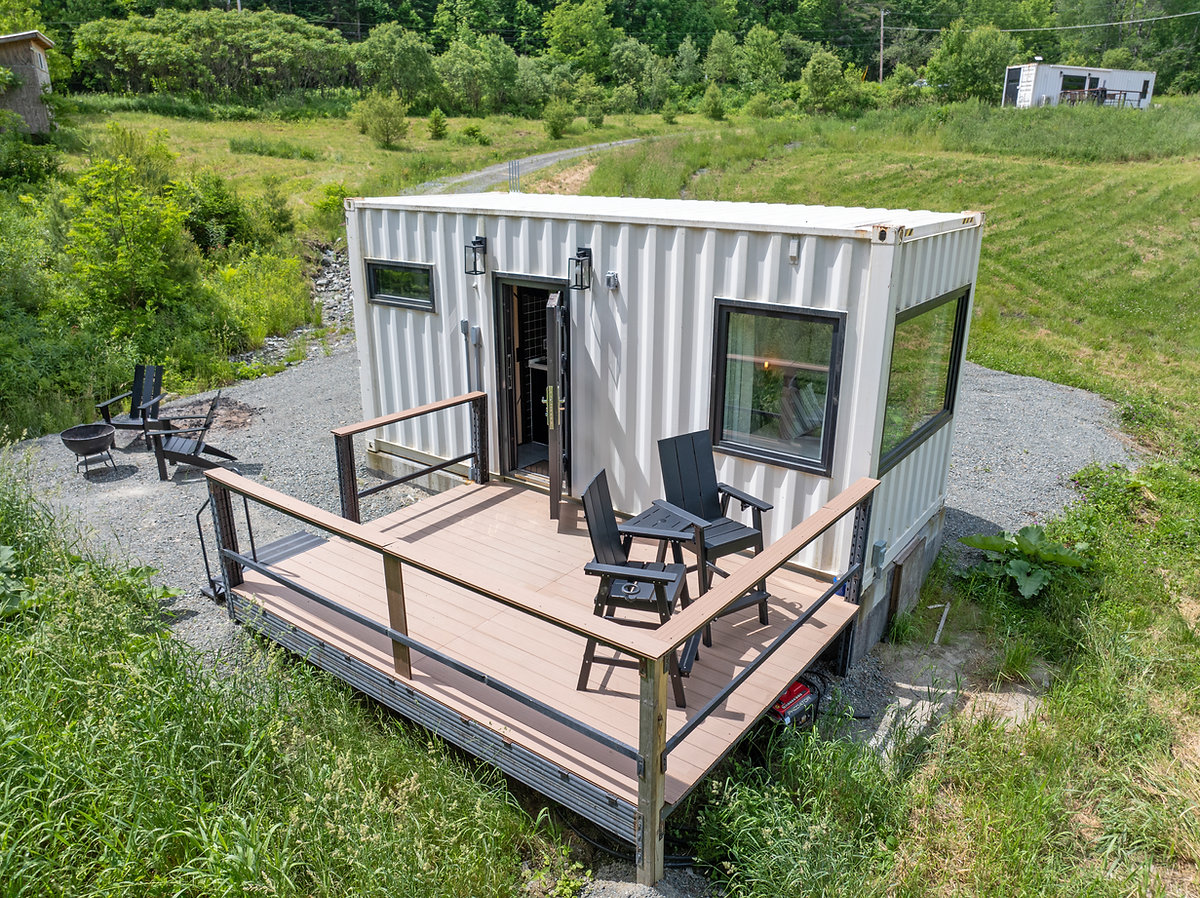
How developers, housing authorities, and workforce housing programs can deliver affordable, for-sale homes at scale with factory-built container construction.
Ask almost anyone under 40 about buying a home and you'll hear the same thing: prices are too high, rates are too high, and the down payment feels impossible. Some are waiting for a crash. Some have given up entirely.
They're not wrong about the problem. But the solution isn't waiting for prices to fall. It's building homes that ordinary working people can actually afford to buy, and building them fast enough and at enough scale to matter.
That is where factory-built container housing fits.
The Affordability Crisis, by the Numbers
Home prices keep climbing. The median existing-home price was $429,100 in August 2026, according to the National Association of Realtors: the 38th consecutive month of year-over-year increases.
Mortgage rates remain high. The 30-year fixed rate spent late summer in the high-6% range and touched 6.95% in mid-September, according to Freddie Mac.
More inventory hasn't fixed it. Inventory rose to 1.62 million homes, the highest since 2019, yet prices still went up. Much of that supply sits at price points first-time buyers can't reach.
Owners are locked in. Millions of homeowners hold mortgages below 4%. Selling means giving up that rate, so many stay put, and the starter homes they'd normally sell never hit the market.
First-time buyers are being pushed out. NAR's 2025 Profile of Home Buyers and Sellers found first-time buyers were just 21% of the market, a record low, and the typical first-time buyer was 40 years old, a record high. In 1991, that age was 28.
Renting isn't a cheap alternative. The national median asking rent is about $1,800 a month. Over five years, that's more than $114,000 paid, with no equity to show for it.
The Math First-Time Buyers Are Up Against
Here's what the median home costs a first-time buyer today, with 10% down and a 30-year fixed rate of 6.75%:
Median home ($429,100): $42,910 down. About $3,205 per month including taxes and insurance. Household income needed at a standard 28% housing ratio: about $137,000.
Now compare a smaller, well-built, for-sale container home:
Container home ($210,000, including land and site work): $21,000 down. About $1,526 per month including taxes and insurance. Household income needed at the same ratio: about $65,000.
Same rate, same loan terms, same lending standards. The difference is the price of the product. A $65,000 household is a teacher, a nurse, a firefighter, a warehouse lead, or a young couple with two modest incomes. These are the people most communities say they want to keep, and exactly the buyers the current market is pricing out.
And the monthly payment is lower than median rent. For many renters, owning becomes cheaper than staying put.
What a Container Home Actually Is
For anyone who hasn't seen one: the container is the exoskeleton.
The shell is a Corten steel frame and skin, engineered to be stacked many units high, fully loaded, on ships crossing the ocean. As a structural shell for a home, it's overbuilt.
Everything inside is conventional, proven construction: reinforced openings, a full insulation envelope, interior framing, electrical, plumbing, HVAC, real windows and doors, finishes, cabinets, and fixtures. The finished product is a well-built home. The steel just happens to be on the outside.
At Boma, we build or source made-to-order containers that have never carried cargo. No used boxes, no unknown history, no patched corrosion. Every home starts from clean, new steel, which matters when you're delivering dozens or hundreds of homes that need to perform, appraise, and hold value consistently.
Why It Works at Scale: Timeline, Quality, Budget
Timeline: Conventional construction is sequential: foundation, then framing, then everything else, all exposed to weather and trade scheduling. With offsite manufacturing, homes are built in a controlled facility while the site team handles grading, foundations, and utilities. When the site is ready, homes arrive finished or near-finished and are set by crane. McKinsey's research on modular construction has estimated schedule reductions of 20 to 50 percent compared with traditional builds.
Quality: A factory repeats a process. A job site reinvents one. Every weld, penetration, and insulation pass happens at working height, under cover, with inspection built into the workflow. Home 100 comes off the same drawings and the same process as home 1.
Budget: When the design is standardized and materials are purchased for the full run, per-home cost is known before ground breaks. Fewer trades on site means fewer change orders and less exposure to local labor shortages.
What Time Is Worth on a For-Sale Project
Consider an illustrative 40-home for-sale community with an average drawn construction balance of $4 million at 8% interest. That's about $26,700 in interest every month.
Cutting 4 months from the schedule saves about $107,000 in interest alone. It also moves closings up by 4 months, which returns capital sooner, reduces market risk, and frees up the next phase.
Pricing homes well below the local median also means a deep buyer pool. When the payment is lower than area rent, the pool of qualified buyers is far larger than for a conventional new build, which supports faster absorption.
For Developers: A For-Sale Product the Market Is Missing
Most new construction targets move-up buyers because that's where conventional building costs pencil out. That leaves the entry level, the starter home, almost entirely unserved.
Factory-built container homes let developers compete in that gap:
Subdivisions and pocket neighborhoods of small single-family homes on compact lots.
Infill lots that are too small or awkward for conventional construction.
Phased communities where each phase is set and sold while the next is being built.
Townhome-style or stacked configurations where zoning allows higher density.
The product is simple to explain, easy to market, and priced where the demand actually is.
For Housing Authorities: More Homes per Dollar, Delivered Sooner
Housing authorities and nonprofit housing developers are under pressure to stretch every public dollar. Predictable per-home costs and shorter schedules mean more homes per funding round and less exposure to cost overruns.
Container homes work well with the tools authorities already use:
Scattered-site programs, where homes are delivered to individual lots across a community.
Community land trusts, where the land is held in trust and the home is sold at an affordable price.
Deed restrictions or shared-equity models that keep homes affordable for the next buyer too.
Down payment assistance programs, where a lower purchase price means each assistance dollar goes further.
A lower purchase price also means lower property taxes, insurance, and maintenance, so homes stay affordable for the owner, not just at the closing table.
For Workforce Housing: Keep the People Your Community Runs On
Hospitals, school districts, police and fire departments, manufacturers, resorts, and rural employers all face the same problem: their workers can't afford to live near where they work. Long commutes and high turnover follow.
Container homes give employers and municipalities a practical path:
Employer-sponsored communities where staff can buy homes near work.
Municipal partnerships on public land to create for-sale homes for essential workers.
Rural and resort-area housing, where conventional construction crews are scarce and costs are highest.
Because homes are built offsite, projects in remote or labor-short areas aren't at the mercy of local trade availability.
Making Sure Buyers Can Get Mortgages
A for-sale program only works if buyers can finance their homes. Container homes can qualify for conventional mortgages when they're built and titled as real property:
Permanent foundation, with the home and land titled together.
Compliance with local building code or a state modular program, including inspections and certificates of occupancy.
Stamped engineering drawings.
The main hurdle is appraisal, since comparable sales for container homes are limited in many markets. Building communities, not one-off homes, helps solve this over time by creating local comps. Early conversations with community banks, credit unions, and lenders familiar with modular construction are essential, and many housing authorities already have lender partners for their programs.
Boma can help connect project teams with lenders familiar with our builds.
The Feasibility Part
No building method fits every site. Before committing, check the following:
Zoning and entitlements: some jurisdictions have minimum home sizes, design standards, or limited experience with the building type. Engage the planning office early.
Site access: homes arrive by truck and are set by crane, so tight sites need a delivery and staging plan.
Climate design: steel conducts heat. Proper insulation and ventilation are non-negotiable, and they're where low-cost builders cut corners.
Market fit: validate local incomes, rents, and sale prices so homes are priced where demand is strongest.
None of these are dealbreakers. They're standard due diligence, and they're solvable up front.
The Bottom Line
High prices, high rates, locked-in owners, and a record-low share of first-time buyers aren't going away on their own. Waiting for a crash isn't a housing policy, and it isn't a business plan.
The fastest way to expand homeownership is to build homes people can actually afford, at scale, on a predictable timeline and budget. Factory-built container homes let developers, housing authorities, and workforce housing partners do exactly that: deliver quality homes with a monthly payment below local rent, and turn renters into owners.
Talk to Boma. Send us your site, home count, and target timeline, and we'll walk you through cost, schedule, and what your project needs.
Sources: National Association of Realtors, Existing-Home Sales, August 2026. National Association of Realtors, 2025 Profile of Home Buyers and Sellers. Freddie Mac Primary Mortgage Market Survey, August–September 2026. Hemlane, August 2026 Rental Market Report. McKinsey & Company, "Modular Construction: From Projects to Products." Buyer and project figures are illustrative. This article is for informational purposes and is not financial, lending, or legal advice.


Comments