
Workforce Housing Cost Per Bed: A 10-Year ROI Breakdown
Most workforce housing decisions get made on a single number: the price per bed for this project. That number is real, but it hides the bigger picture. A unit that's built to last and built to move doesn't get used for one project. It gets used for a decade or more.
So the more useful number is workforce housing cost per bed over the full life of the asset. Here's how that math works over 10 years of heavy use, and how it compares to paying for hotel rooms or full-service lodging.
The Assumptions
To keep the math honest, here's exactly what we're using:
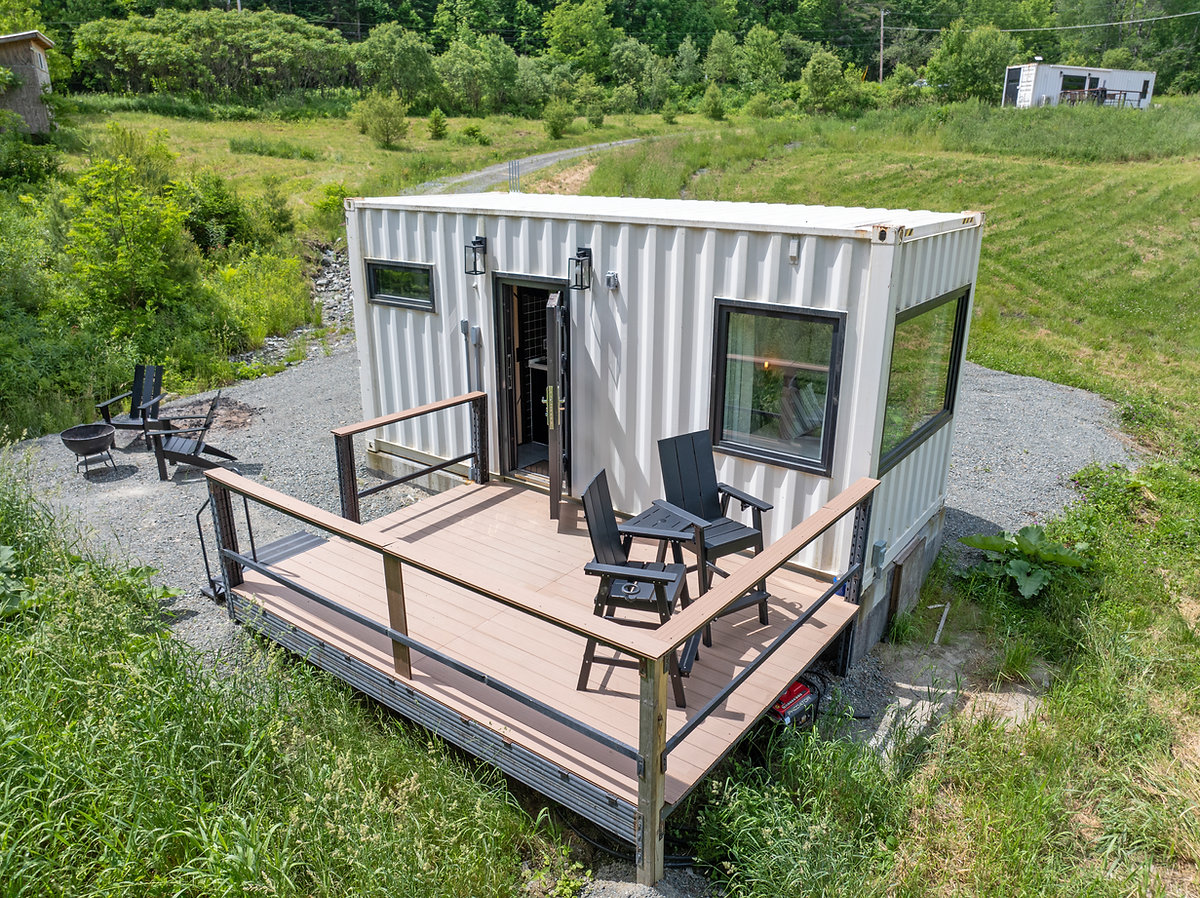
Unit price: $75,000 delivered, the published starting price of the Kodiak Boma, a 320 sq. ft., 2-bed, 1-bath bunkhouse built inside a 40-foot container. Base Camp units are quoted per project, so your numbers will differ.
Beds per unit: 2.
Use: occupied every night for 10 years, which is 3,650 nights per bed and 7,300 bed-nights per unit.
Hotel comparison: $110 per night, the federal government's FY2026 standard lodging rate for most of the continental US.
Full-service lodging comparison: $72.36 per bed per day, the average daily rate Target Hospitality reported for its HFS-South network in Q2 2026. That rate includes lodging services, so it isn't a pure apples-to-apples comparison with an unstaffed unit.
What's not in the unit price: site prep, foundations or blocking, utility connections, a central hub, ongoing utilities, maintenance, management, and financing. We'll come back to those.
Per Unit, Per Bed, Per Night
Measure | Container unit | Hotel at $110/night |
Cost per unit (2 beds) | $75,000 | $80,300 per year |
Cost per bed | $37,500 | $40,150 per year |
Cost per bed over 10 years | $37,500 | $401,500 |
Unit capital cost per bed-night | About $10.27 | $110 |
The headline: the capital cost of one bed in a container unit is less than one year of hotel nights at the federal standard rate. At $110 a night, $37,500 buys about 341 nights in a hotel. The container bed keeps working for another nine years after that.
Scaling It to a 100-Person Camp
Fifty 2-bed units house 100 workers. At the starting price above, that's $3.75 million in units.
Housing the same 100 workers in hotel rooms at $110 a night costs about $4.0 million per year. Over a three-year data center build, that's roughly $12 million in lodging, and the money is gone when the project ends. The camp, meanwhile, is still standing and can move to the next site.
Adding the Costs the Unit Price Doesn't Cover
A camp isn't free to run, so here's a fair way to think about the rest. Site work, utilities, a dining and laundry hub, maintenance, and on-site management vary a lot by location, but you can test them as an allowance per bed-night.
For illustration only, suppose those costs added $30 per bed-night on top of the unit's $10.27. The all-in figure would be about $40 per bed-night. That's still well under the $72 full-service rate and far under a $110 hotel night. Your real number depends on the site, the services you provide, and how you finance it, so model it with your own inputs.
Why 10 Years Is a Conservative Horizon
Shipping containers are built to survive years at sea, and their average lifespan is often put at around 25 years, with maintenance extending it further. On land, with a full insulation envelope, a sealed interior, and basic upkeep, a well-built container unit has a long working life.
That's why a 10-year horizon is a modest assumption. A unit that serves three back-to-back data center builds at three years each, with a relocation between each one, reaches that mark with life left in it.
Where the Math Can Go Wrong
The 10-year number only holds if the units are actually used for 10 years. A few things can break it:
Units that are hard to move. If relocation needs oversize permits and escorts for every load, the camp may get abandoned instead of reused. See why legal-load units move easier.
Materials that wear out early. Drywall, cheap flooring, and undersized HVAC fail faster under round-the-clock use.
Idle time between projects. Every month a unit sits empty pushes the cost per bed-night up.
No exit plan. Units that can be sold or converted at the end hold value even after their working life with you is over. See what happens to workforce housing after the project.
How to Run Your Own Numbers
Use this sequence for any vendor, including us:
Start with the delivered unit price and divide by beds per unit.
Estimate realistic occupancy over 10 years, including gaps between projects.
Add site, utility, hub, and operating costs as a per-bed-night allowance.
Subtract expected resale or reuse value at the end of the period.
Compare against your actual alternative, whether that's local hotels, per diems, rentals, or a full-service lodging contract.
Frequently Asked Questions
What does workforce housing cost per bed?
It depends on the unit and the services. Using the $75,000 starting price of a 2-bed Boma unit, the unit cost is $37,500 per bed, or about $10.27 per bed-night over 10 years of full use, before site, utility, and operating costs.
Is it cheaper to buy workforce housing or use hotels?
For long builds, usually. At the federal $110 standard lodging rate, one hotel bed costs about $40,150 a year, more than the per-bed cost of a container unit that can be reused for years.
How long does container workforce housing last?
Shipping containers are often cited at around a 25-year average lifespan, and maintenance extends it. A 10-year working life for a well-built unit is a conservative planning number.
What's not included in a per-unit price?
Typically site prep, foundations, utility connections, common facilities, ongoing utilities, maintenance, management, and financing. Ask every vendor to spell this out.
Get Numbers for Your Project
We'll build a per-bed and per-night estimate around your actual headcount, schedule, and site.
Sources: U.S. General Services Administration, FY2026 per diem rates (standard CONUS lodging rate $110), as reported by the Texas Hotel & Lodging Association. Target Hospitality Q2 2026 earnings call (HFS-South average daily rate $72.36). Falcon Structures, "How Long Do Shipping Containers Last?" Figures are illustrative; this article is for informational purposes and is not financial advice.


Comments