
How a Container Home Handles a New England Winter
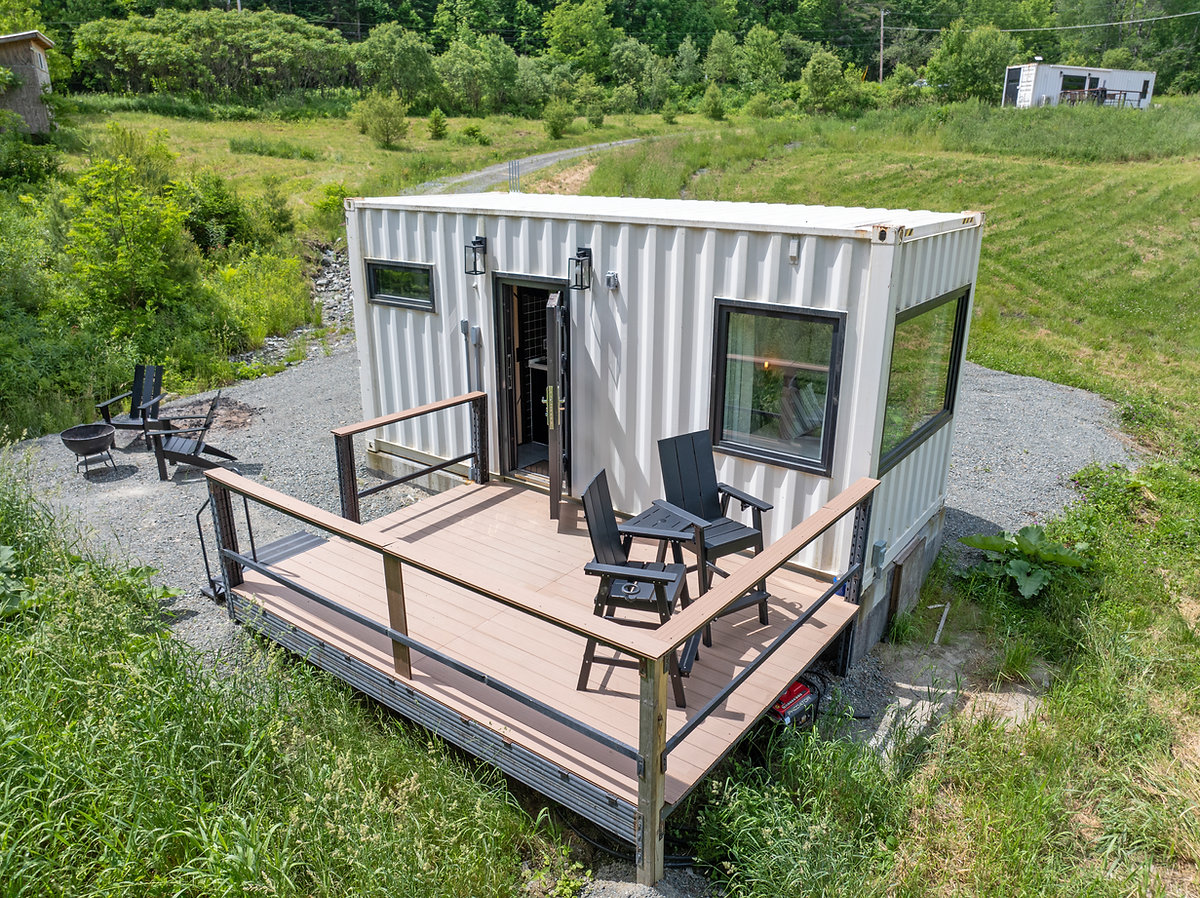
The first question we hear from buyers in the Northeast is some version of this: "Isn't a steel box going to be freezing?"
It's a fair question. Bare steel is a terrible insulator. Touch the side of a shipping container on a January morning and you'll know it. But a finished home isn't a bare container, and the details that make a container home in winter comfortable are the same ones that make any well-built house comfortable: insulation, airtightness, the right heat source, and a foundation and plumbing plan built for frost.
Here's how each of those works, and what we've learned running our own rental through White Mountains winters.
Why Bare Steel Is Cold, and Why That's Solvable
Steel conducts heat several hundred times faster than wood, stud for stud. Any piece of steel that touches both the cold outside and the warm inside becomes a path for heat to escape, and the cold spots it creates are where moisture condenses.
So the steel shell has to be fully separated from the living space by a continuous layer of insulation. That's the whole game. Get it right and the steel becomes what it should be: a tough exterior skin that keeps weather and pests out.
Closed-Cell Spray Foam: Insulation and Moisture Control in One Layer
Every Boma unit is insulated with closed-cell spray foam, and it's the right material for a steel shell for three reasons:
High R-value per inch. Closed-cell foam runs around R-6.5 per inch, roughly double fiberglass or cellulose, which matters in a container where every inch of wall thickness comes out of the living space.
An air barrier. Spray foam is better than any other insulation type at stopping air leakage, and air leaks cause most cold-weather heat loss.
No condensation on the steel. Closed-cell foam is vapor-impermeable and bonds directly to the shell, so warm, moist indoor air never reaches the cold steel. That's what prevents the dripping walls and hidden rust people worry about.
Heat: Cold-Climate Mini-Splits
Boma units use ductless mini-split heat pumps for heating and cooling. Not all mini-splits are equal in cold weather. Cold-climate models are built to keep producing heat in deep cold, and regional efficiency specifications ask for units that keep at least 80% of their rated capacity at 5°F.
A small, well-insulated, airtight space doesn't need much heat to stay comfortable, which is exactly what a mini-split does well. For remote cabins, we still recommend planning a backup for the worst nights of the year, whether that's a second heat source or a generator that can carry the heat pump through an outage. Off-grid units can be configured for solar or generator power from the start.
Snow Load: Confirm It for Your Site
Snow load requirements vary widely across the Northeast, from coastal towns to mountain valleys. Your town's building department sets the design snow load for your property, and the roof needs to be designed and approved for it.
We address this during the project planning phase, before anything is built, so the unit is specified for where it's actually going. A few practical habits help too: keep the roof clear of heavy drifts, keep doors and decks shoveled, and leave room around the unit for snow to land when it slides off.
Foundations and Frost
In cold climates, the ground freezes and heaves. A foundation that sits above the frost line can shift, which racks doors, cracks connections, and stresses plumbing.
A stem wall, which can be built with insulated forms in cold climates, or concrete piers set below the local frost depth, keeps the unit stable through freeze-thaw cycles. Your local building department and contractor will confirm the required depth for your area. Our site prep guide covers the foundation options in detail.
Plumbing That Doesn't Freeze
Frozen pipes cause more winter damage than cold walls ever will. The rules are simple:
Keep water lines inside the heated envelope wherever possible.
Protect the service entry, where water and sewer lines come up from the ground, with insulation and heat cable where needed.
Never let the heat drop to zero in an occupied-season unit. A low setpoint is fine; off is not.
Winterize seasonal camps. If a hunting cabin will sit empty and unheated, drain the lines and blow them out before you leave.
What We've Learned in the White Mountains
Our own rental, Boma White Mountains in Littleton, New Hampshire, operates through the winter, close to skiing at Cannon Mountain and Bretton Woods. That means real guests, real cold snaps, and real feedback on whether the space stays comfortable at 2 a.m. in January. The insulation, air sealing, and heat pump approach described here is the same one we build into every unit we sell.
If you'd rather test it than take our word for it, you can stay in a container home before you build.
A Winter-Ready Checklist
System | What to confirm |
Insulation | Continuous closed-cell spray foam covering the steel shell |
Heat | Cold-climate mini-split, plus a backup plan for remote sites |
Roof | Designed for your town's required snow load |
Foundation | Stem wall or piers below the local frost line |
Plumbing | Lines inside the heated space; protected service entry |
Seasonal use | A winterizing plan if the unit sits empty and unheated |
Frequently Asked Questions
Are container homes cold in winter?
Not when they're properly built. Bare steel is cold, but a continuous layer of closed-cell spray foam separates the shell from the living space, stops air leaks, and prevents condensation on the steel.
How do you heat a container home in winter?
Most use a ductless mini-split heat pump. Cold-climate models are built to keep producing heat in deep cold. Remote and off-grid sites should plan a backup heat source or generator.
Do container homes get condensation?
Condensation happens when warm, moist air touches cold steel. Closed-cell spray foam bonded to the shell keeps indoor air away from the steel, which is why the insulation choice matters so much.
Can a container home handle snow?
The roof must be designed for the snow load your town requires. That's confirmed during planning, before the unit is built, based on where it's going.
Build for Four Seasons
Whether it's a ski-season rental, a hunting camp, or a year-round home, we'll help you plan a unit that's ready for the coldest week of the year.
Sources: Green Building Canada, "Steel Homes: A Winter Performance Guide." Green Building Advisor, "Spray Foam Insulation: Open-Cell and Closed-Cell." Northwest Energy Efficiency Alliance (NEEA), Cold Climate Ductless Heat Pump Specification.


Comments