
Why Data Center Workforce Housing Is Surging

Author: Boma Properties | Read Time: 6 min | Updated: July 2026
The AI data center boom has a bottleneck that has nothing to do with power, chips, or permits: it's where to put the thousands of construction workers needed to build each campus. Across the country, data center workforce housing has quietly become one of the fastest-growing categories in construction — and the old "man camp" is being rebuilt from the ground up to meet it.

Bloomberg Intelligence estimates that $700 billion worth of mobile housing projects are currently in development, tied directly to the broader AI data center boom.* Whatever the final number, the direction is clear: modular workforce housing is no longer a niche real estate play. It's infrastructure — as critical to a data center's timeline as the substation or the fiber run.
Here's what's driving the surge, why traditional man camps are struggling to keep up, and where Base Camp by Boma fits into the picture.
Why Workforce Housing Is Becoming Critical Infrastructure
Every data center headline focuses on power — megawatts, substations, grid interconnects. But talk to the general contractors actually building these campuses and you'll hear a different story: the real constraint is housing the workforce.
Data center construction spending hit $36.9 billion year-to-date through February 2026 — compared to just $1.4 billion over the same period in 2025. Full-year 2026 spending is projected to surpass $52 billion. That capital is chasing land, power, and water in places that were never built to absorb a construction workforce.
67% of planned U.S. data centers are headed to rural America, according to Pew Research — markets chosen for cheap land and available power, not housing stock. A typical hyperscale build now deploys 500 to 2,000 workers to a site with little to no existing hotel or rental housing nearby. Someone has to solve that problem before a single server rack goes in — which is exactly why construction workforce housing has moved from a logistics afterthought to a critical-path line item.
Layer a labor shortage on top of that housing gap and the picture sharpens further. ITIF pegs the construction industry's shortfall at 439,000 workers driven directly by data center growth, and the Associated Builders and Contractors (ABC) estimates the industry needs to hire up to 499,000 additional workers in 2026 alone. More than one in five construction workers is over 55, and roughly 41% of the current workforce is expected to retire by 2031.
Crew sizes are scaling to match the ambition of these projects. Where a data center build once peaked around 750 workers on site, projects like DataBank's Red Oak campus are expected to hit 4,000 to 5,000 workers by early 2026. Every one of those workers needs a bed, a shower, and a place to eat within a reasonable distance of the job site — which is precisely the gap that modular workforce housing is being built to close.
Why Traditional Man Camps Are Being Reconsidered
The industry's first response to this gap was the traditional man camp: dormitory-style trailers, shared bunks, and a setup timeline that can run up to 180 days. In Cheyenne, Wyoming, a developer has proposed an 800-unit, 5,600-worker man camp to support the data center campuses Microsoft, Meta, and others are building in Laramie County — a camp that would be larger than 84 of Wyoming's towns, in a city of just 66,000 people. It's a dramatic example, but it's not an outlier. It's the model most of the industry has defaulted to.
The problem is that model was built for a different era of construction. It worked when camps housed a few hundred oilfield workers for a defined season.
It's a weaker fit for a data center project where:
• The build runs 18 to 36 months, not a few months
• The workforce includes higher-skill trades and engineers who have other housing options
• Retention, not just occupancy, determines whether the schedule holds
• The site may need the housing again for the next project down the road
That's why developers are increasingly competing on housing quality, not just headcount — free steak, game rooms, and even golf simulators have shown up in coverage of the newest camps. That's a signal, not a gimmick: when a GC is trying to hold onto 1,000-plus workers for an 18-to-36-month build, the quality of the workforce housing has become a genuine competitive lever, and a growing number of GCs and developers are actively looking for a man camp alternative that's faster to deploy and easier to keep staffed.
Where Base Camp by Boma Fits
Base Camp by Boma takes the container-built housing model Boma has already proven at scale — including manufacturing and fabrication for the 100+ unit 83 Freight apartment project in Nashville, now known as The Byrum — and applies it to workforce housing for data center construction. Private rooms instead of bunks, courtyard-style clusters instead of a trailer grid, and a mobilization window designed around 100 days instead of the up to 180 days a standard man camp typically takes.
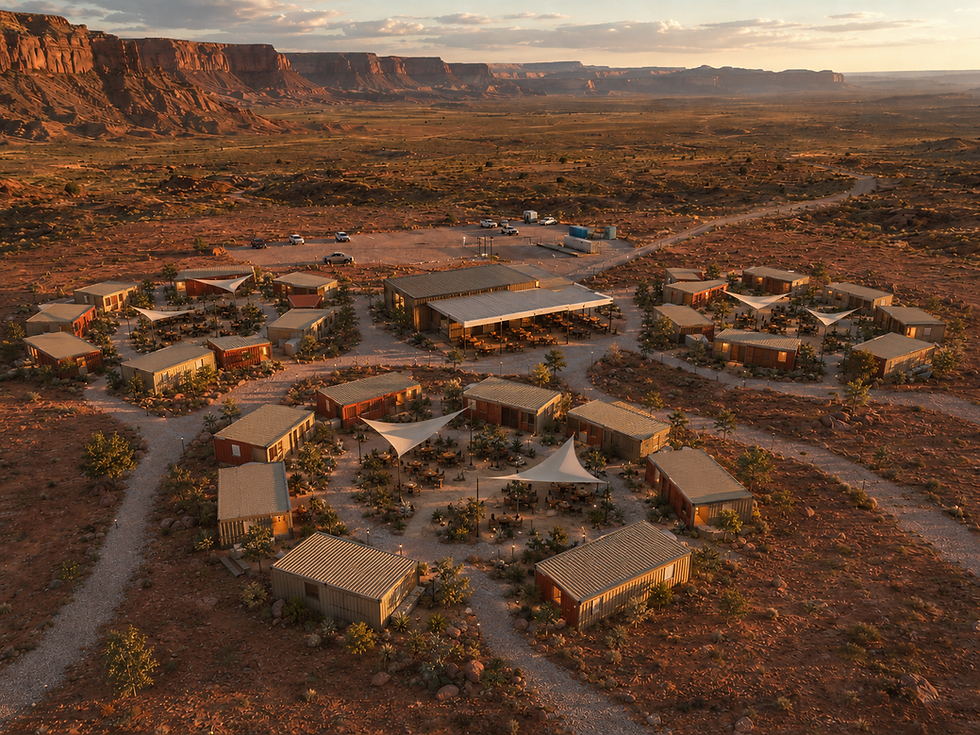
Boma's container-based housing experience extends beyond data centers, too — the same modular approach that built Base Camp also supports scalable housing solutions for developers working on multi-unit and large-scale projects more broadly.
We covered the basics of container-based man camps in our earlier explainer on what modern man camps are and why data centers need them. This series goes further: the market forces behind the boom, why retention has become the metric that matters, and what actually separates a workforce village from a traditional camp.
The headline is simple: capital is flowing into workforce housing because rural data center construction cannot happen without it, and the operators who win this cycle will be the ones who treat housing quality as a schedule risk, not a line item.
Frequently Asked Questions
What is data center workforce housing?
Data center workforce housing is temporary or semi-permanent housing built near a data center construction site to house the general contractors, tradespeople, engineers, and project staff who can't commute from existing housing stock. It's often built using modular or container-based construction to allow for faster deployment and relocation.
What is a "man camp" in the context of data center construction?
A man camp is a traditional term for temporary workforce housing built near a construction site. Historically associated with oil and gas projects, the term now applies broadly to data center construction, where camps can house anywhere from 25 to several thousand workers. Many providers now describe the modern version as a workforce village to reflect the shift toward private rooms and hospitality-style amenities.
Why are data centers driving so much demand for construction workforce housing?
Data centers are increasingly built in rural markets chosen for cheap land and available power — markets that typically have little to no existing housing or hotel capacity. With projects running 18 to 36 months and deploying 500 to 2,000+ workers, on-site workforce housing becomes a critical path item rather than an afterthought.
How is modular workforce housing different from a traditional man camp?
Modular workforce housing emphasizes private rooms over shared bunks, hospitality-grade amenities, faster mobilization, and relocatable construction — a direct response to worker retention becoming a bigger risk to project timelines than setup cost alone.
Is Base Camp by Boma a man camp alternative or a traditional camp provider?
Base Camp by Boma is positioned as a modern man camp alternative — a container-based workforce village designed around private rooms, courtyard layouts, and relocatable units, rather than the dormitory-style trailers associated with traditional camps.
Start Planning Your Workforce Housing Project
Base Camp by Boma is modular workforce housing for data center and industrial construction — designed around a 100-day mobilization target, built to retain the crews that keep your schedule on track.


Comments